
Intraoral Tumor Surgery
The lining of the mouth and throat can develop growths: a lump, an ulcer or a thickened patch on the floor of the mouth, inside the cheek, on a tonsil or in the throat. Many are benign, but some are cancers, so any lesion that has not healed within two to three weeks should be examined and biopsied.
The biopsy result and a scan decide the treatment. Benign growths and small cancers are usually removed through the mouth under general anaesthesia, leaving no visible scar. Larger tumours may need a wider excision, a flap to rebuild the area and a neck dissection; depending on the stage, radiotherapy or chemotherapy may also be part of the plan.
Our contracted head and neck surgeons in İstanbul perform tonsillectomy for tumours, excision of floor-of-mouth, cheek and pharyngeal tumours, flap reconstruction and neck dissection. As an international patient you send your biopsy report and MRI or CT first; the surgeon reviews them and proposes a plan before you travel, and any radiotherapy is coordinated with your team at home.
Conditions treated
- Tumours of the tonsil and back of the throat (oropharynx)
- Tumours of the floor of the mouth
- Tumours of the inside of the cheek (buccal mucosa)
- Benign growths of the mouth and throat (cysts, papillomas, fibromas)
- White or red patches with abnormal cells (leukoplakia, erythroplakia)
- Oral or throat cancer with enlarged neck lymph nodes
Procedures performed
- Tonsillectomy
- Floor of Mouth Tumor Excision
- Cheek Tumor Excision
- Pharyngeal Tumor Excision
- Flap Reconstruction
- Neck Dissection
What to expect
The four stages every international patient goes through with us.
- 01
Consultation and diagnostics
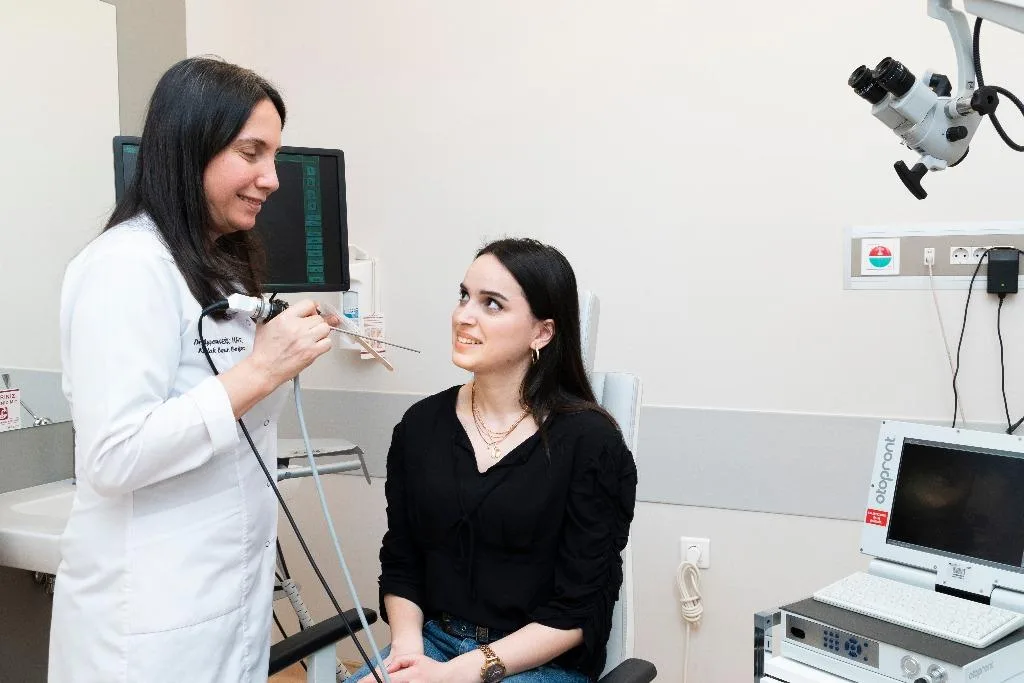
Examination of the mouth and throat, often with a thin endoscope, a biopsy of the lesion if one has not been done, and MRI or CT to define the tumour and check the lymph nodes. Reports you already have are reviewed remotely. When teeth lie close to the tumour or radiotherapy is likely, a dental review is arranged before surgery.
- 02
Surgery
Under general anaesthesia and, for most tumours, entirely through the mouth, so there is no scar on the face. A small excision or tonsillectomy takes under an hour; a wider excision with a neck dissection or flap reconstruction takes several hours, and the neck is reached through an incision in a skin crease. The surgeon confirms the approach with you beforehand.
- 03
Hospital stay
One to two nights after a small excision or tonsillectomy, and up to a week or longer when a flap has been used. Pain is controlled with medication, the mouth is kept clean with rinses, and swallowing is checked before you move from liquids to soft food. A feeding tube may be used briefly after larger operations.
- 04
Follow-up from home
The pathology result, usually within about a week, shows whether radiotherapy is needed; if so, it is coordinated with your oncologist at home. A soft diet continues for two to three weeks, and regular checks of the mouth and neck follow, with your dentist involved where relevant. Our team stays in contact after you return.
Typical timeline
- Hospital stay
- 1–7 nights (depends on reconstruction)
- Stay in İstanbul
- 10–21 days
- Soft diet
- 2–3 weeks
Typical ranges for an uncomplicated case. Your surgeon confirms your own plan after reviewing your reports.
Performed at
Contracted practices in İstanbul whose own treatment lists include this work.
Common questions
Will there be a visible scar?
For most tumours of the mouth and tonsil the whole operation is done through the mouth, so there is no scar on the face. A neck dissection needs an incision in the neck, placed along a natural skin crease so that it fades into the lines of the neck over time. If a flap is taken from the forearm or thigh, that site leaves a scar that is usually covered by clothing.
What will I be able to eat afterwards?
Liquids first, then a soft diet for two to three weeks, avoiding hot, spicy, acidic and hard foods while the wound in the mouth heals. Gentle mouth rinses keep the area clean. After larger operations a feeding tube may be used for the first days until swallowing has been checked. Your surgeon and a dietitian guide the steps.
What should I send before travelling?
Your biopsy or pathology report, MRI or CT images together with the written report, any endoscopy report, a list of your medicines and a note of any previous treatment. Recent dental X-rays are helpful if teeth lie near the lesion. The surgeon reviews everything and tells you what, if anything, must be repeated in İstanbul.
General information, not medical advice. Your treatment plan is set by the operating surgeon after reviewing your reports.